Dark Campsites Are Ruining Your Trip: The LED Work Light Fix
Dark Campsites Are Ruining Your Trip: The LED Work Light Fix
The average camping lantern outputs around 400 lumens. A single 60-watt incandescent bulb puts out 800. Most outdoor travelers are cooking dinner, setting up gear, and navigating their campsites with less light than a bathroom nightlight — and treating that as completely normal. It isn’t.
I spent two summers doing overlanding trips through the American Southwest before I finally diagnosed my campsite lighting problem correctly. Spoiler: it wasn’t a lantern problem. It was a category problem.
The Night My Camping Lantern Finally Stopped Working for Me
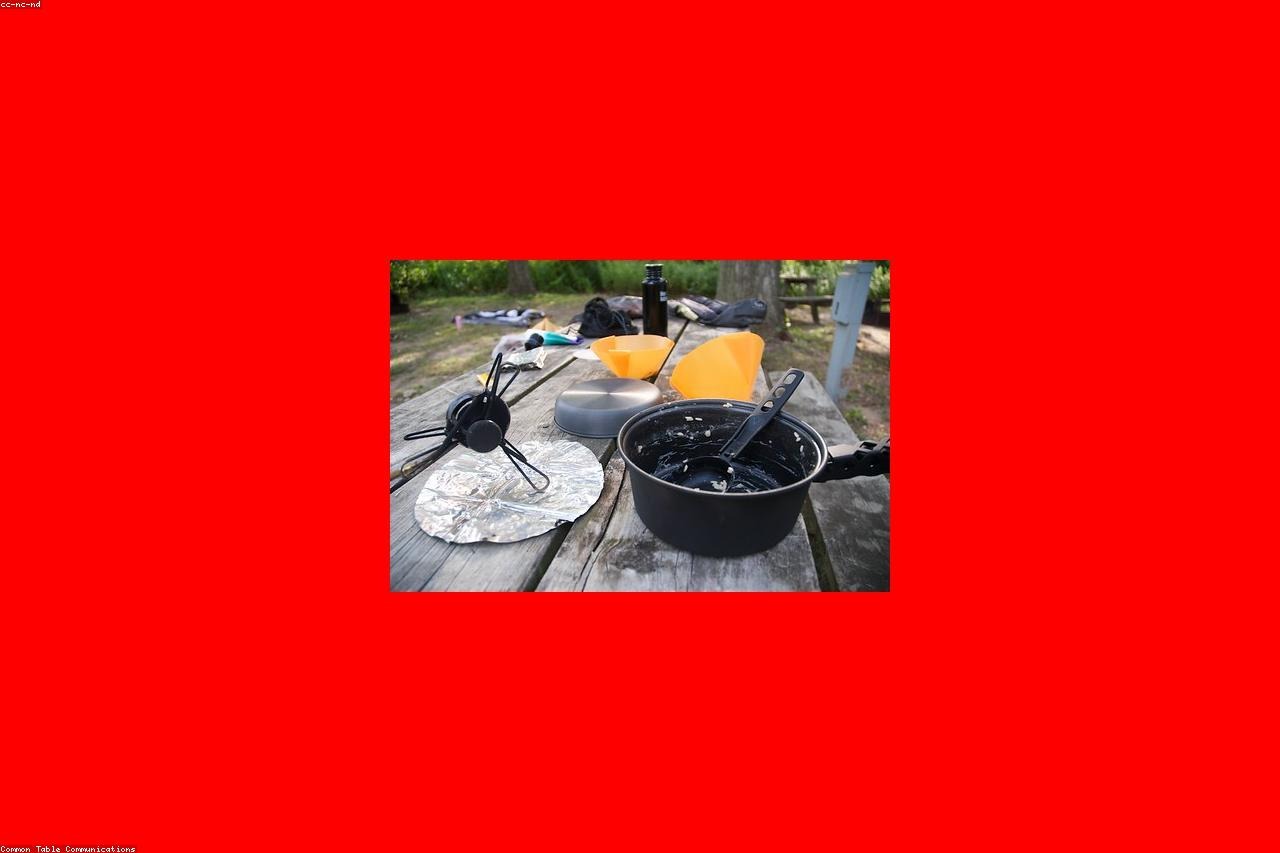
It was around 9 PM at a dispersed site in Utah’s San Rafael Swell. I was trying to cook a real meal — not just boil water — and my Coleman 800 Lumen LED Lantern was doing its best. It sat on the table throwing a warm glow over roughly a five-foot radius. Everything beyond that: pitch black.
I reached for my fuel canister and knocked over the stove. I couldn’t see the ground clearly enough to step safely around the site perimeter. My friend, on his first overlanding trip, said it felt like eating in a basement.
The next morning I looked at the Coleman. Great product for what it is. But what it is, is a tabletop light for close-up tasks. I had been using a tool designed for reading inside a tent as my primary site illumination for two years. That was the real problem.
Why lanterns fail beyond a six-foot radius
Lanterns are omnidirectional by design — they throw light in a sphere. That sphere is brightest close to the source and dims quickly as you move away. The Black Diamond Moji+ ($30) is genuinely excellent for reading in a tent. At 200 lumens max, it is nearly useless for lighting a cooking station and gear area simultaneously.
The Goal Zero Lighthouse 600 ($80) steps it up to 600 lumens, which is a real improvement. But at six feet away from the lamp, you have roughly 17 lumens per square foot hitting your work surface. Enough to see shapes. Not enough to work comfortably, identify gear, or move safely across uneven ground. Any object between you and the lantern creates a shadow that swallows the space behind it.
The positioning issue compounds everything. A lantern on a table sits roughly two feet off the ground. Most of its output hits the table surface directly below it. The area around the table stays dim regardless of the rated brightness. You are not fighting a brightness problem — you are fighting a geometry problem.
How construction workers solved this decades ago
If you need to light a large outdoor area at night — a job site pour, an emergency staging area, a film location — nobody puts a lantern on a table. You mount a powerful light source on a tripod, elevate it above head height, and angle it at the zone you are working in.
The physics are simple. A light elevated six feet off the ground illuminates a dramatically wider area than the same light sitting at two feet. Angle three independent heads across a campsite and you can cover a cooking zone, a gear table, and a path to your vehicle from a single fixture. That has been standard practice in construction and event production for decades. Outdoor travelers have largely ignored it.
Once I started looking at portable LED tripod work lights instead of camping lanterns, the value comparison was immediate. For the same price as a mid-range lantern, I could get more than thirty times the light output. That is not a marginal upgrade. It is a fundamentally different experience after dark.
What 21,000 Lumens Actually Looks Like Outdoors
Numbers on a product page are easy to dismiss without context. A car headlight on low beam produces roughly 700 lumens per side. A bright phone flashlight: 50 to 100 lumens. A 21,000 lumen LED work light on a six-foot tripod is equivalent to fifteen low-beam headlights firing simultaneously. Pointed at a standard campsite from that height, it covers an area roughly the size of a two-car garage with workable brightness throughout.
The 400 to 21,000 lumen spectrum in real outdoor use
Here is what each output range actually delivers at a campsite at night:
- 400 lumens: Soft ambient glow, useful within four feet. Good for tent ambiance, not for anything functional beyond that.
- 800 lumens: Bright enough for a single task at close range. Still mostly a table light with soft halos at the edge.
- 4,000 lumens: The Wagan Tech 3,000 Lumen Work Light ($38) sits in this range. Covers a small cooking area adequately. A real improvement over lanterns but still limited to a single zone.
- 14,000 lumens: Covers a standard 30×30-foot campsite completely. You can see clearly across the entire site including the far perimeter.
- 21,000 lumens: Large group sites, multiple work zones, anywhere you need clear visibility at 25 feet or beyond. Three adjustable heads let you engineer the light distribution instead of accepting it.
Beam spread matters as much as the lumen number
A focused spotlight and a wide flood light can carry identical lumen ratings. For campsite use, the spotlight is nearly worthless — all that output concentrated in a narrow beam. You need flood-pattern coverage, and the more independently adjustable the heads, the more useful the fixture becomes in practice.
The 21,000 lumen 3-head work light at $55.99 splits its output across three independently repositionable heads. Point one at the cooking area, one at the gear zone, one covering the path back to your vehicle. You are not locked into a fixed beam pattern the way you are with a lantern or a single-head fixture. That adaptability is worth more than the raw lumen number on most real campsites.
Power requirements before you buy
These lights run on standard 110V AC. You need either shore power at a developed campground, a portable generator, or a power station with adequate capacity. The EcoFlow Delta 2 ($599, 1024Wh) and the Jackery Explorer 1000 ($999, 1002Wh) both handle the load comfortably. A 200-watt work light running four hours uses roughly 800Wh — within range for either unit on a single charge.
This is not a backpacking product. It is purpose-built for car camping, overlanding, van life, RV setups, and any situation where you arrive with a vehicle and a power source. If you are hiking in with everything on your back, the Black Diamond is the right call. If you are driving to your site, there is no logical reason to limit yourself to 400 lumens.
IP66 Waterproofing: The One Rating That Actually Matters Here
IP66 means complete dust sealing and resistance to high-pressure water jets from any direction. A sudden desert downpour, coastal fog, a knocked-over water bottle — none of it takes the light offline. Compare this to IPX4, which handles light splashes only and fails in sustained rain. For any outdoor use beyond a covered porch, IP66 is the floor, not a premium feature.
21,000 Lumen vs 14,000 Lumen: Which One to Buy
Both models carry identical IP66 waterproofing and the same 4.4/5 rating from 309 verified reviews. The decision comes down to how many zones you need to cover and a $10 price difference.
| Feature | 21,000 Lumen (3-Head) | 14,000 Lumen (2-Head) |
|---|---|---|
| Price | $55.99 | $45.99 |
| Light Heads | 3 adjustable | 2 adjustable |
| Output | 21,000 lm | 14,000 lm |
| Effective Coverage | 25+ ft radius, large/group sites | 15–20 ft radius, standard sites |
| Waterproofing | IP66 | IP66 |
| Best Use Case | Groups, overlanding, multi-zone setups | Solo or couple travel, standard sites |
| Rating | 4.4/5 (309 reviews) | 4.4/5 (309 reviews) |
The 14,000 lumen version is the smarter buy if
You are camping solo or with a partner at a standard-sized site. Two adjustable heads cover a cooking area and a seating zone without issue. The 14,000 lumen 2-head model at $45.99 handles that with brightness to spare. Most solo travelers and couples will never use a third head, making the $10 savings a clear and logical win.
The 21,000 lumen version earns its price if
You are running a group of four or more, working a dispersed site with a large footprint, or doing vehicle maintenance in the field. The third adjustable head is the real differentiator — it lets you divide light across three distinct zones simultaneously. On a group trip with a cooking area, a dining area, and a vehicle access path, two heads means picking two of those three. Three heads covers all of them without repositioning mid-evening.
Five Mistakes Travelers Make When Buying Portable Outdoor Lights
- Buying by price instead of output. A $12 clip-on LED at 200 lumens and a $46 tripod work light at 14,000 lumens are not competing products — they serve entirely different functions. The brightness gap is not 3x, it is 70x. Judge by lumens per dollar, not by sticker price alone.
- Treating IPX4 and IP66 as interchangeable. They are not. IPX4 handles light splashes from predictable directions. IP66 handles sustained heavy rain and direct water jets from any angle. One overnight storm in a coastal or mountain environment will illustrate the difference clearly. Only buy IP66 or higher for outdoor use.
- Using a lantern as a floodlight. Lanterns are designed for ambient close-range lighting — inside tents, on dining tables, bedside in a camper van. Using one as your primary campsite work light is the wrong tool for the job. Expecting a reading light to perform like a site floodlight is why so many campsites feel perpetually dim regardless of how many lanterns are running.
- Underestimating mounting height. A light sitting two feet off the ground throws most of its energy sideways at eye level. The same light on a six-foot tripod throws light downward across a wide, even area. This single variable — mounting height — changes effective coverage more than an additional 5,000 lumens would. Always confirm the tripod’s maximum height before buying any portable work light.
- Skipping the power source planning. Tripod work lights need AC power. If you buy one before confirming your power setup — generator capacity, power station size, shore power availability — you will end up with a useless fixture on your first trip. Nail down your power source before you shop for lights, not after the box arrives.
Why a Tripod Work Light Wins Over Any Lantern for Functional Camp Use
A lantern is a comfort item. A tripod work light is infrastructure. The moment your campsite tasks require more than sitting quietly — cooking, organizing gear, group dinners, field repairs — the lantern becomes decorative.
The practical gap no marketing language closes
The BioLite SiteLight ($129) is the best camping lantern currently made. Rechargeable, compact, 500 lumens on high, a warm adjustable color temperature, and a thoughtful design that hangs or stands. It is a genuinely excellent product. At 500 lumens, it covers a small dining table. The 21,000 lumen tripod work light covers an entire campsite including the 20-foot perimeter. That is not a marginal brightness difference — it is a different category of tool.
The cost math: $129 for 500 lumens (BioLite SiteLight) versus $55.99 for 21,000 lumens. The work light delivers 42 times more output for less than half the price. When the numbers work out that clearly, the answer is not complicated.
Setup takes under two minutes. Extend the tripod legs, raise the center column to five or six feet, angle the heads where you need them. The IP66 rating means you leave it running when the weather rolls in. It does not need to come inside. It does not need to be covered. It just keeps working.
When to keep the lantern in rotation
Inside a tent, a work light is the wrong call — blinding at close range, impractical in size. For quiet campfire evenings where ambiance matters, the harsh white output of a high-lumen LED fixture kills the mood in a way no one wants. And for any backpacking or hiking where pack weight and battery life are the constraints, a tripod work light is obviously a non-starter.
The practical split: use a lantern for personal space and ambient light inside enclosed areas. Use a tripod work light for any functional outdoor zone where you are actually doing things. They are not competing — they are tools for different jobs, and owning both costs under $90 total.
Outdoor travelers consistently underinvest in campsite lighting and overspend on everything else — the real upgrade that changes how usable your camp is after dark is not a better tent or a more expensive stove, it is swapping 400 lumens on a table for 14,000 lumens on a tripod.