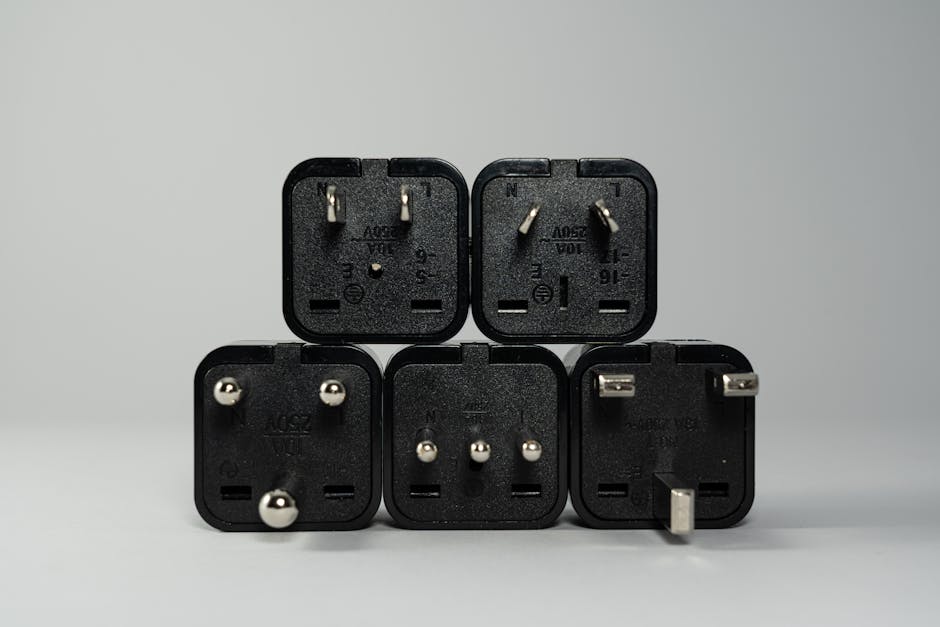
9 Smart Voltage Converters That Actually Simplify International Travel
Over 130 countries run on 220–240 volts — nearly double the 120 volts powering North American outlets. Plug an American hair dryer into a European socket without a converter, and you won’t just ruin the dryer. You might start a fire.
Most travelers figure this out the hard way: they buy a cheap plug adapter, assume it handles voltage, and spend the first morning of their trip staring at a sparking outlet in a Paris hotel bathroom. The smarter approach is understanding what converters actually do, which nine are worth carrying, and when you don’t need one at all.
Converters vs. Adapters: The Distinction That Costs Travelers Real Money
A plug adapter changes the physical shape of a plug so it fits into a foreign outlet. Full stop. A Type C adapter in France, a Type G adapter in the UK, a Type I adapter in Australia — these swap the prong configuration so your charger physically connects to the wall. But the electricity behind that wall is still 220–240 volts. If your device can’t handle 220V, the adapter doesn’t protect it. It just lets the wrong voltage in faster.
A voltage converter — also called a step-down transformer — actually changes the electrical output. It converts 220–240V down to 110–120V so North American single-voltage devices run normally. These cost more and weigh more because they contain real transformer hardware doing real electrical work, not just mechanical plug-fitting.
How to Tell If Your Device Needs a Converter
Look at the power label on the device’s cord or charging brick. If it reads “INPUT: 100–240V, 50/60Hz,” the device is dual voltage. Laptops, phone chargers, tablet chargers, most camera battery chargers, and USB-C power bricks are almost universally dual voltage. These only need a plug adapter — carrying a converter for them is unnecessary weight and wasted money.
Single-voltage devices — labeled “INPUT: 120V” or “INPUT: 110–120V” — are where converters earn their place. North American hair dryers, curling irons, standard electric shavers, travel steamers, older blenders, and most budget kitchen appliances fall here. So do CPAP machines without an international mode.
For context: the Dyson Airwrap and GHD Platinum+ are dual voltage — they work everywhere with just a plug adapter. The Conair Infiniti Pro 1875W and most drugstore-brand hair dryers are single voltage. That gap is the entire reason the travel converter market exists, and why travelers still regularly fry appliances abroad despite this being a well-documented problem.
Step-Down vs. Step-Up: Which Direction Are You Converting?
A step-down converter reduces 220–240V to 110–120V. That’s what North American travelers need when going abroad. A step-up converter does the reverse — for travelers from 220V countries visiting the US who want to run their European or Asian appliances stateside. Some units handle both directions automatically.
The BESTEK 220W International Travel Converter is a practical example: it handles step-down conversion and includes four USB-A ports, so dual-voltage devices like phones charge through USB while a single-voltage appliance runs through the converter stage — no hunting for a separate adapter.
The wattage rating on any converter is the hard ceiling. A 200W converter cannot run a 1875W hair dryer. The math doesn’t negotiate. Either you match or exceed the device’s wattage — with some headroom — or you’ve bought the wrong product.
9 Travel Voltage Converters Compared: Wattage, Weight, and Price
All nine products below have documented specs. The table is sorted by wattage capacity, which is the most important spec to match before buying.
| Converter | Max Wattage | USB Ports | Weight | Approx. Price | Best Use Case |
|---|---|---|---|---|---|
| BESTEK 75W Travel Converter | 75W | 4 USB-A | 0.5 lbs | ~$22 | Electric shavers, low-draw devices |
| BESTEK 220W International Converter | 220W | 4 USB-A | 0.7 lbs | ~$24 | Travel steamers, CPAP, general use |
| Bronson 100W Step-Down Converter | 100W | None | 0.6 lbs | ~$28 | Medical devices, small single-voltage appliances |
| GOLDSAII 2000W Travel Converter | 2000W | 3 USB-A, 1 USB-C | 1.3 lbs | ~$30 | Budget high-wattage option with USB-C |
| DOACE V8 2000W Converter | 2000W | 2 USB-A | 1.3 lbs | ~$33 | Full-size hair dryers, no USB-C needed |
| DOACE C11 2000W Travel Converter | 2000W | 2 USB-A, 1 USB-C | 1.4 lbs | ~$35 | Hair dryers, curling irons, USB-C charging |
| Conair Travel Smart 1875W Converter | 1875W | None | 1.2 lbs | ~$42 | Dedicated hair tool use, frequent travelers |
| Krieger KR1500 1500W Transformer | 1500W | None | 3.2 lbs | ~$60 | Extended stays abroad, kitchen appliances |
| Seven Star SS-410 2000W Transformer | 2000W | None | 4.5 lbs | ~$65 | Long-term abroad living, home appliances |
A few things the table doesn’t convey.
The BESTEK 220W is the practical default for most short-trip travelers. Under a pound, $24, and the four USB-A ports let you charge a phone simultaneously while running a small appliance through the converter. For a two-week trip with occasional converter needs, it’s the right call. The BESTEK 75W is its lighter sibling — better for travelers whose only single-voltage item is an electric shaver or a small heated travel tool under 75W.
For hair tools, the DOACE C11 2000W is the category pick. It handles the full load of a standard 1875W North American hair dryer, includes USB-C (uncommon at this price point), and weighs 1.4 lbs. The DOACE V8 is nearly identical without USB-C for $2 less — no reason to pay more unless you actively use USB-C. The Conair Travel Smart 1875W has a loyal following among frequent travelers who bring heat tools on every trip. It’s purpose-built for hair tool loads. But no USB ports means you’re still hunting for a separate phone adapter.
The Krieger KR1500 and Seven Star SS-410 are not luggage items. A 3.2-lb or 4.5-lb transformer belongs under a desk in a rented Berlin flat, not in an overhead bin above Rome. These are built for sustained daily use over months — running a coffee maker, a blender, or a television in an apartment abroad. Buy them when you’ve relocated, not when you’ve packed for a vacation.
Wattage Math: How to Size a Converter to Your Devices
What happens when the converter is underpowered for the device?
At best, the converter’s thermal protection trips and shuts the unit down. At worst — especially with cheap converters lacking proper safety circuits — it overheats, damages itself, and can damage whatever device is drawing power through it. The device doesn’t run at reduced capacity when underpowered through a converter. Either it gets its full load or the system fails, and the failure mode can be destructive in both directions.
Add up wattage before choosing. Hair dryer: 1500–1875W. Curling iron: 25–100W. Electric shaver: 10–25W. Travel steamer: 800–1000W. CPAP without humidifier: 30–60W. CPAP with humidifier: 80–120W. Running multiple devices simultaneously through one converter? Those numbers stack.
How much headroom should the converter have above the device’s wattage?
A 20–25% buffer above your peak draw is the standard target. Running a 1875W hair dryer through a 2000W converter puts you at 94% capacity continuously — real thermal stress on the unit. Ideally you’re at 75–80% of rated capacity for sustained use. In practice, 2000W is the ceiling for travel-grade converters, so for a 1875W dryer you accept the limited headroom and compensate with one rule: don’t run anything else through that converter simultaneously.
Does frequency — 50Hz vs. 60Hz — matter?
For most modern electronics, no. Digital devices, switching power supplies, laptop chargers, and phone bricks are frequency-agnostic. But certain devices with electric motors — some fans, older clocks, specific kitchen appliances — run at speeds partly determined by frequency. A 60Hz motor on a 50Hz grid runs about 16% slower. A voltage converter changes voltage. It does not change frequency. This edge case is real but narrow — mostly relevant for vintage electronics, specialized medical equipment, or appliances with analog timers. For hair dryers and phone chargers, it’s not a practical concern.
When a Plug Adapter Is All You Actually Need
Check the power label on your devices before buying anything. Laptops, phone chargers, e-reader chargers, and USB-C bricks almost universally say “INPUT: 100–240V” — they handle any voltage worldwide. For these, a $10 multi-country plug adapter set is the only purchase needed. A $35 voltage converter would be entirely wasted weight.
The honest assessment: most travelers packing modern electronics don’t need a voltage converter at all. Converters justify themselves only when you’re bringing a hair dryer, curling iron, electric shaver, or other appliance bought in North America that isn’t marketed as dual voltage or travel-ready. Check the label first. It takes ten seconds.
Mistakes That Kill Devices and Converters Abroad
- Buying a plug adapter thinking it converts voltage. These products look nearly identical in listings. A converter will specify a wattage capacity and explicitly mention voltage conversion. If the product page only discusses plug shapes and compatible countries, it’s an adapter only. Read the spec sheet, not the title.
- Pairing a high-wattage device with an undersized converter. A 200W converter will not run a 1875W hair dryer. It will trip its thermal shutoff — or burn out. Calculate device wattage first, select a converter with that capacity plus headroom, then buy. Do it in that order.
- Running dual-voltage devices through a converter unnecessarily. If your laptop charger handles 100–240V, plug it directly into the foreign outlet with just a plug adapter. Running it through a converter adds heat and resistance without any benefit. The converter is for single-voltage devices only.
- Buying unbranded converters to save $10–15. Sub-$12 converters from unknown brands routinely lack thermal protection and surge suppression. CE and UL certifications are not marketing language — they represent tested safety standards. BESTEK and DOACE both carry CE certification. The price gap between a certified unit and an unbranded one is small; the consequence gap is not.
- Packing a heavy transformer for a short vacation. The Seven Star SS-410 weighs 4.5 lbs. For a two-week trip, that’s an absurd trade-off when a 1.4-lb DOACE C11 handles the same hair dryer load. Heavy transformer units are built for apartments abroad, not airport carry-ons.
- Assuming all destinations use the same voltage. Japan runs on 100V — close enough to North American 120V that most devices work without any converter. Parts of Brazil use 127V. Saudi Arabia, India, the UK, Europe, and Australia all use 220–240V. A quick search for the destination country’s outlet voltage takes ten seconds and can prevent a ruined device.
- Running compact travel converters at continuous full load. Most travel-grade converters — including the BESTEK and DOACE units — are rated for intermittent use: typically 10–20 minutes at sustained high load before needing to cool down. For a quick hair dry, fine. For a 40-minute styling session, check the product’s duty cycle specification. The Krieger KR1500 and Seven Star SS-410 are built for continuous load. The compact travel units are not.
Quick reference by traveler type:
- All devices labeled 100–240V on the power brick: buy a plug adapter set only — no converter needed
- One low-draw single-voltage device under 75W (shaver, small appliance): BESTEK 75W (~$22), minimal weight
- General travel, mixed small appliances under 220W: BESTEK 220W (~$24) — the practical default for most trips
- Hair dryer or full-wattage curling iron: DOACE C11 2000W (~$35) — the category pick, handles 1875W loads and includes USB-C
- Extended stay abroad with sustained daily appliance use: Krieger KR1500 (~$60) or Seven Star SS-410 (~$65) — built for continuous use, not carry-on bags