10 Tasty British Foods To Try In The UK
My first trip to the UK, I made every mistake in the book. I ate fish and chips near Leicester Square for £18 — soggy batter, pre-frozen chips, ketchup packets. I thought that was just what British food was. Then a local took me to a chip shop in Whitby, North Yorkshire, on a wet Tuesday evening. Same ingredients. Completely different experience.
Three years and multiple UK trips later, here’s the list I wish I’d had before that first flight.
The 10 British Dishes at a Glance
Every dish below is genuinely worth trying — but several have tourist-trap versions that’ll put you off the real thing before you’ve even given it a fair shot. Here’s the honest overview before we go deeper.
| Dish | What It Is | Best Place to Find It | Typical Price | Verdict |
|---|---|---|---|---|
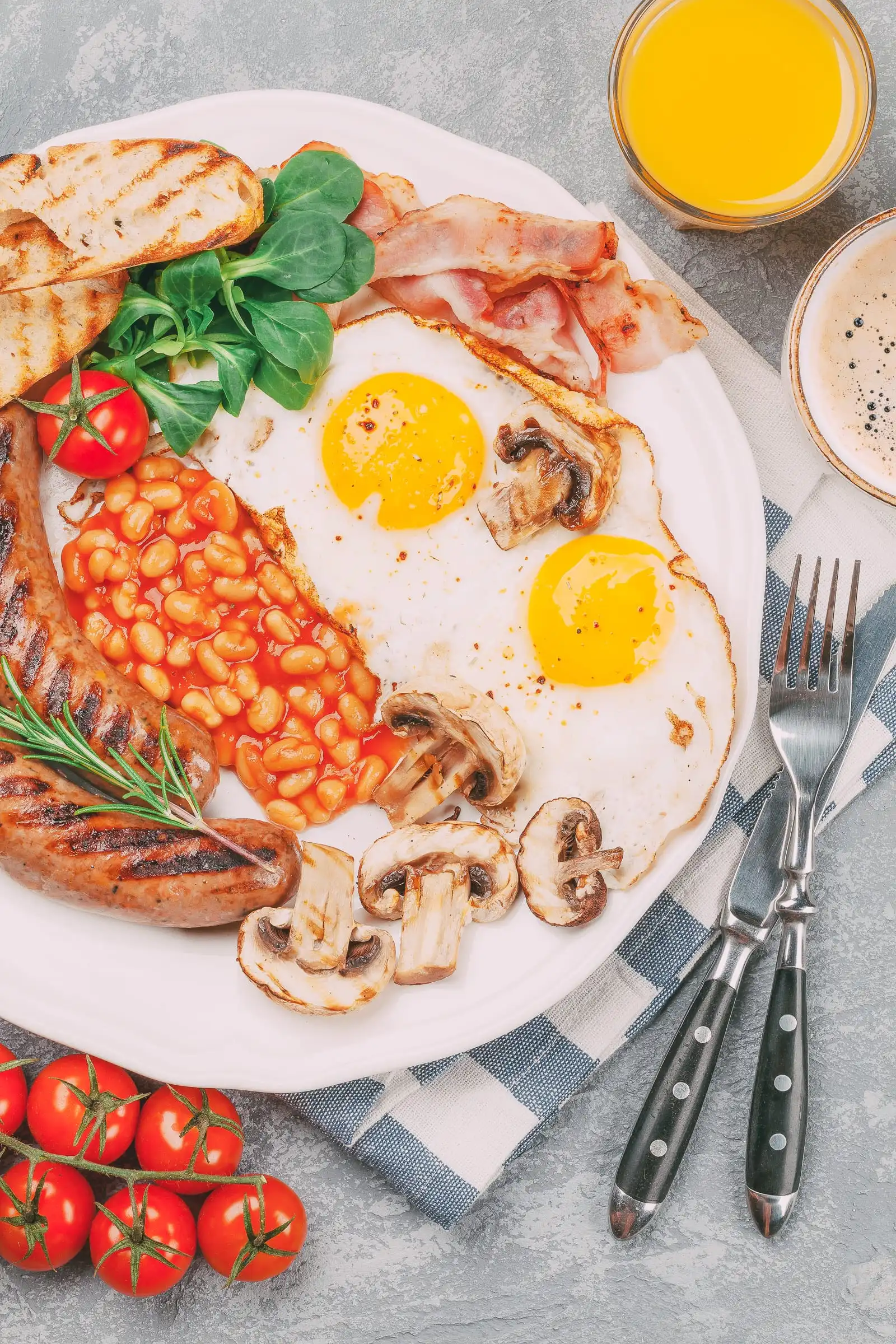
| Full English Breakfast | Back bacon, pork sausages, eggs, baked beans, black pudding, grilled tomato, mushrooms, toast | Independent greasy spoon cafe | £8–£14 | Essential |
| Fish and Chips | Battered cod or haddock with thick-cut chips | Coastal chip shop, away from tourist areas | £9–£16 | Essential, if done right |
| Sunday Roast | Roasted meat, crispy roast potatoes, Yorkshire pudding, vegetables, gravy | Independent pub, Sundays only | £15–£25 | One of Britain’s best meals |
| Cornish Pasty | Crimped pastry with beef skirt, potato, swede, onion | Warrens Bakery or any bakery in Cornwall | £4–£6 | Worth the trip to Cornwall |
| Scotch Egg | Hard-boiled egg in sausage meat, breadcrumbed and fried | Borough Market, London or a good pub | £3–£5 | Very good |
| Sausage Roll | Puff pastry around seasoned pork sausage meat | Greggs, any UK high street | £1.15 | Surprisingly great |
| Sticky Toffee Pudding | Dense date sponge in warm toffee sauce | Any pub restaurant in northern England | £7–£10 | The best British dessert, full stop |
| Afternoon Tea | Finger sandwiches, scones with clotted cream and jam, mini cakes, pot of tea | Bettys Tea Rooms (York) or Fortnum & Mason (London) | £28–£65+ | Worth it once, for the experience |
| Black Pudding | Pork blood sausage, sliced and fried | As part of a Full English | Included in breakfast | Try it — most people are surprised |
| Eton Mess | Crushed meringue, whipped cream, fresh strawberries | Pub dessert menus, June to August | £7–£9 | Underrated — order it |
Prices shift significantly by location. London adds roughly 20–30% to nearly everything on this list. A Full English that costs £9 in Leeds or Manchester will run £13–£14 at a comparable London cafe doing the exact same plate.
Full English Breakfast and Fish and Chips — Start With These Two
If you only have capacity for two dishes on a short trip, make it these. Both are deceptively simple, both are badly misrepresented by their tourist-area versions, and both are genuinely excellent when done properly.
What Goes Into a Proper Full English
The core components: back bacon (not streaky — that’s American), pork sausages, baked beans, fried or scrambled eggs, grilled tomato, mushrooms, toast, and black pudding. That last one is a disc of pork blood sausage fried until the outside crisps. It sounds confronting. It tastes like a deeply savory, earthy version of a pork sausage — and most people who reluctantly try it end up going back for more.
The Full English lives and dies by sausage quality. Good ones have 80%+ pork content, a coarse texture, and subtle herb seasoning. Supermarket-grade sausages with filler and water ruin the whole plate. The best versions I’ve eaten came from independent cafes in the north of England — places with laminated menus and a queue out the door by 9am. Skip hotel breakfast buffets entirely. The sausages are always wrong and the eggs have been sitting under a heat lamp.
In London, E Pellicci in Bethnal Green (around £12) has been doing this since 1900 and hasn’t changed much. The portion is enormous and the quality is consistent. It books up fast on weekends so arrive before 9am or expect a wait.
Fish and Chips — What Separates Good From Forgettable
The batter should be light, crisp, and golden — not thick, doughy, or heavy with oil. The fish inside should be white and flaky, cod or haddock. The chips are thick-cut, soft in the middle, nothing like French fries. Mushy peas on the side are not optional. Neither is malt vinegar.
The biggest variable is how fresh the fish is and how often the oil gets changed. Bad chip shops use old oil and pre-battered frozen fish. Good ones turn over fresh stock daily. You can tell within 30 seconds — the oil should taste clean, not heavy or acrid.
The best fish and chips in England are almost always at the coast. Whitby, Scarborough, Brighton, and St Ives all have strong contenders. The Magpie Cafe in Whitby (main courses around £16, expect a queue) is probably England’s most famous chip shop and earns it. In London, Poppies in Camden or Shoreditch (£14–£18) is consistent and uses proper fresh fish. If you’re heading north of Aberdeen into Scotland, Tate’s Fish and Chips in Stonehaven is worth the detour — they also claim to be the birthplace of the deep-fried Mars Bar, which is a real item you should try once, purely for the story.
The Greggs Sausage Roll Is Not a Joke
Buy one. It costs £1.15, it’s available at over 2,500 Greggs shops across the UK, and the combination of flaky puff pastry and properly seasoned pork sausage filling is genuinely hard to argue with. Greggs is a northern English bakery chain that has been running since 1939 — the sausage roll is the reason the whole country queues there before work. Eat it warm, straight from the paper bag.
Six More British Foods That Actually Deliver
The rest of the list, with honest context for each one.
- Sunday Roast — The best meal in Britain and the one most tourists miss entirely because it only exists on Sundays, typically noon to 4pm. Roast beef or chicken arrives with crispy roast potatoes, a Yorkshire pudding (a hollow, airy pastry shell made from egg batter — not a dessert, despite the name), seasonal vegetables, and thick, glossy gravy. The Yorkshire pudding alone justifies being in the country on a Sunday. Find an independent pub rather than a chain, book a table in advance, and treat it as the main event of the day. Even an average Sunday roast in a decent pub is deeply satisfying.
- Cornish Pasty — A D-shaped pastry hand-crimped along the top edge, filled with beef skirt, diced potato, swede, and onion, seasoned simply with salt and pepper. The recipe has Protected Geographical Indication status — meaning authentic Cornish pasties can only be made in Cornwall. The thick crimped crust was historically a handle for tin miners to grip with dirty hands, then discard. Warrens Bakery (founded 1860, multiple Cornwall locations) makes a reliable version for around £5. Buy it fresh and eat it immediately — reheated pasties lose everything.
- Scotch Egg — A peeled hard-boiled egg wrapped in seasoned sausage meat, rolled in breadcrumbs, and deep-fried. The yolk should be slightly runny inside; ask for it that way if you’re buying from a stall. Borough Market in London sells excellent handmade versions from multiple vendors for £4–£5. Marks & Spencer sells a decent supermarket version for around £2 if you need a quick option between trains — it’s a step above the gas station version.
- Sticky Toffee Pudding — A dense sponge made with chopped dates, served warm and completely drenched in toffee sauce. The Sharrow Bay Hotel in Cumbria claims to have invented it in the 1970s. Whether that’s true or not, the Lake District is a fine place to eat it — thick cream on the side, cold outside, proper pub atmosphere. Order it whenever it appears on a menu in the north of England. It’s better than it sounds, which is already saying something because it sounds very good.
- Afternoon Tea — Three tiers: finger sandwiches at the bottom (cucumber, smoked salmon, egg mayo), plain and fruit scones with clotted cream and strawberry jam in the middle, miniature pastries and cakes at the top. The experience is the point, not just the food. Bettys Tea Rooms in York or Harrogate (£32–£45 per person) has been doing this since 1919 and remains the benchmark outside London. Fortnum & Mason on Piccadilly starts at £65 per person. Book both weeks ahead — they fill up fast.
- Eton Mess — Crushed meringue folded through whipped cream with fresh strawberries. Simple, no technique required, and better than it has any right to be. The name comes from Eton College, where it was traditionally served at the annual cricket match. It’s only worth ordering in summer (June through August) when British strawberries are in season. Out of season, the strawberries are watery and the whole thing falls apart. Get it right and it’s one of the most satisfying desserts on any British menu.
Why Most Tourists Eat a Bad Version of Every Dish on This List
The version of British food available near major tourist attractions is often a pale shadow of what locals actually eat. This isn’t an accident — high-footfall areas can charge more for less and rely on the fact that visitors don’t know any better. Here’s how the pattern plays out across three key dishes.
Fish and Chips Near Tourist Areas
Any chip shop within 500 metres of a major London attraction is operating on volume, not quality. Leicester Square, Covent Garden, the South Bank — all have fish and chips on offer, nearly all use pre-battered frozen fish, and most charge £15–£20 for the privilege. The tell is easy: if the exterior is decorated with Union Jacks, there’s someone outside trying to usher you in, and the menu has photographs, walk away.
Real chip shops have a queue of locals. The menu is usually written on a board above the counter. They often close by 9pm because they’ve run through the day’s fresh stock. That’s what you’re looking for.
The Afternoon Tea Trap
Every hotel in London now offers “afternoon tea” at £45–£80. Some are excellent. Many are not — stale sandwiches, clotted cream from a commercial tub, scones baked the previous day and reheated. They all look identical from the outside, and the price alone tells you nothing about quality.
Stick to Bettys, Fortnum & Mason, or The Ritz (from £75). They are expensive, but the consistency justifies it. The random hotel afternoon tea is a genuine coin flip — you might get something lovely, or you might spend £55 on a disappointing hour.
The Chain Restaurant Problem With Full English
Wetherspoons (the pub chain found in almost every UK city) does a passable Full English for around £6 — fine if the budget is tight. But Café Rouge, Brewers Fayre, Premier Inn buffets, and similar operations consistently produce inferior breakfasts. The sausages are always the problem: pink, squishy, and low on actual pork content.
The correct move is always the independent cafe. Look for places without a branded exterior, with a hand-written menu in the window and staff who’ve worked there for years. They’re cheaper than the chains and almost always better. They’re also in every UK city and town — you just have to look away from the main tourist drag to find them.
Back in Whitby, standing in the Magpie Cafe queue with rain coming in off the North Sea, I finally understood what I’d been missing that first week in London. The fish came out in batter so light it crackled when I pushed a fork through it. The chips held heat for a solid ten minutes. There was a pot of tea on the table and the harbour was grey outside the window. That’s British food at its actual best — modest on paper, exactly right in context.