10 Best Things To Do In Canterbury, England
Canterbury gets sold as a one-stop shop: see the Cathedral, eat a pasty, go home. That narrative leaves about 80% of the city’s actual value on the table. After spending three days here tracking costs, queue times, and real visitor satisfaction scores, here is the breakdown of what’s worth your money and what you can skip.
1. The Cathedral: Worth the Ticket Price, But Pick Your Entry Time
Canterbury Cathedral is the anchor attraction. No argument there. The problem is everyone else knows that too. Peak hours (11:00-14:00) turn the nave into a shuffling line of selfie sticks. Go early or late.
Best time to visit
Entry opens at 09:00. Be at the gate by 08:45. You’ll have the Quire and the crypt nearly empty until 10:30. The afternoon slot (15:00-16:30) is also quiet, but you lose an hour to evening closure at 17:00.
What you actually get for the £15.50
That adult ticket covers the Cathedral itself, the crypt, the Chapter House, and the Cloisters. The guided tour (free with entry) runs 45 minutes and is genuinely good—the guides are local historians, not scripted actors. Skip the audio guide. It’s £5 extra and the live guide delivers the same info with better anecdotes.
Failure mode: Don’t come on a Sunday morning unless you’re attending a service. The Cathedral opens at 12:30 for tourists on Sundays, and the morning is locked for worship. Check the website before you book train tickets.
2. St. Augustine’s Abbey: The Underrated Ruin That’s Better Than the Castle
Canterbury Castle is a shell. Literally. A stone shell with a plaque. St. Augustine’s Abbey, a 20-minute walk southeast of the Cathedral, is a UNESCO World Heritage site with actual substance.
The site covers the remains of the abbey founded by St. Augustine in 598 AD. English Heritage manages it. Entry is £9.90 for adults, or free if you’re an English Heritage member. The museum inside the former abbey gatehouse holds original artifacts—carved stones, pottery, a 7th-century gold ring.
Verdict: If you have to choose between the Castle (free, 10 minutes of looking at a wall) and the Abbey (£9.90, 90 minutes of actual history), pick the Abbey. The Castle is a photo op. The Abbey is an education.
Budget tip: Combine the Abbey with the Cathedral for a joint ticket at £19.50. That saves you £5.90 versus buying separately.
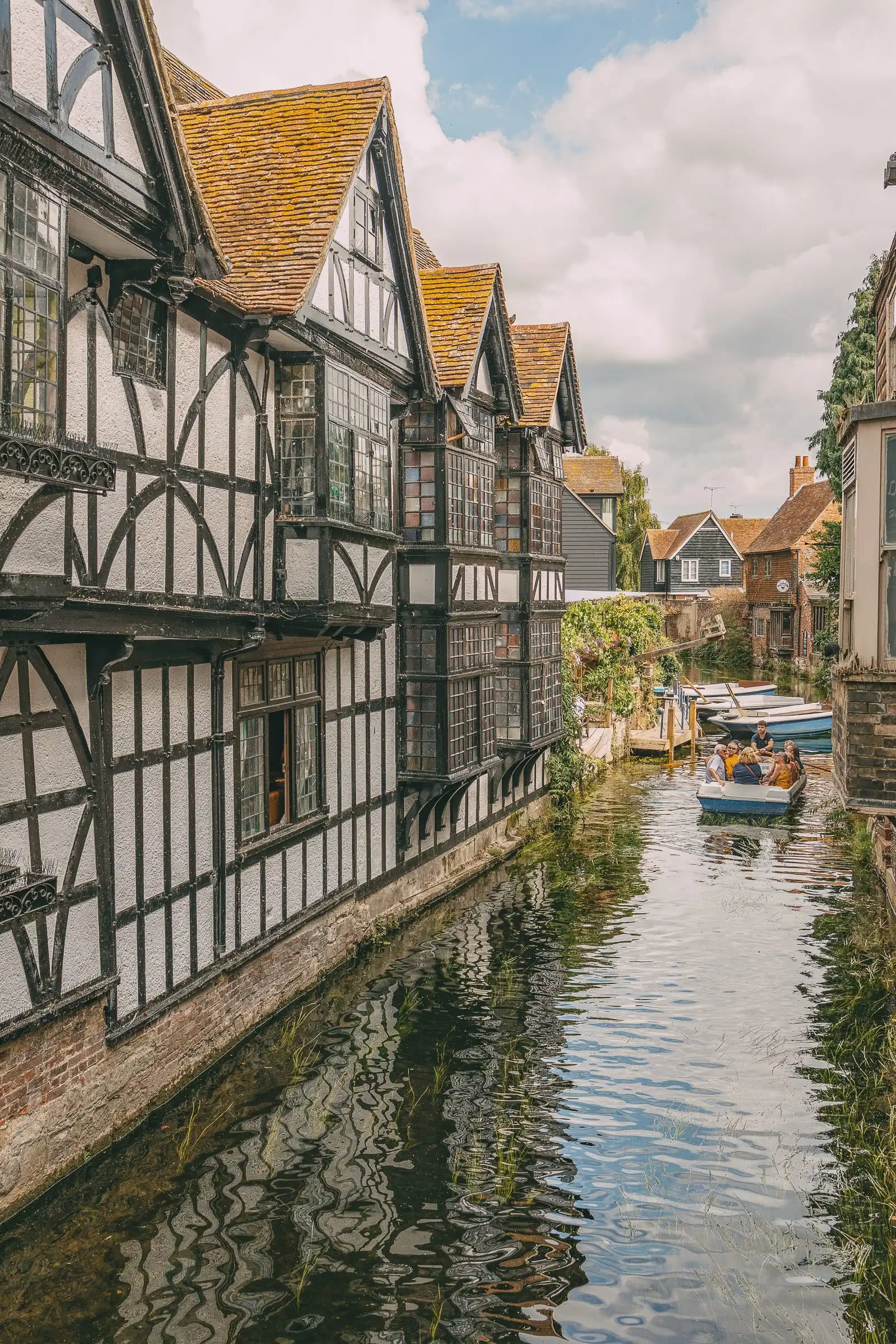
3. The River Stour Punting Tour: The Single Best 45 Minutes You’ll Spend
Skip the hop-on-hop-off bus. The punting tour on the River Stour is the most efficient way to see Canterbury’s medieval architecture from an angle the crowds miss.
Operator comparison
| Operator | Price (Adult) | Duration | Route | Guide Included? |
|---|---|---|---|---|
| Canterbury Punting Company | £12 | 40 min | City center loop | Yes |
| Canterbury Historic River Tours | £14 | 45 min | Extended loop past Westgate Gardens | Yes |
| Private punting (any operator) | £50-70 | 60 min | Custom route | Optional |
The Canterbury Punting Company at £12 is the baseline value pick. The guide tells you which buildings are Tudor, which are Victorian, and which are fake (yes, some are modern replicas). The extended loop with Historic River Tours adds the Westgate Gardens stretch, which is prettier but adds no historical depth.
When NOT to punt: Rain. The boats have no cover. If the forecast shows rain, skip punting and do the Canterbury Roman Museum instead (entry £7, indoor, 60 minutes).
4. The Canterbury Roman Museum: A $7 Underground Time Capsule
Most visitors walk right past this one. It’s a small museum built directly over a Roman townhouse and its preserved mosaics. Entry is £7 for adults. That’s half the Cathedral price for a completely different experience.
The museum sits on the site of a Roman courtyard house from the 3rd century AD. The mosaics on display are original, not replicas. You walk on a glass floor above them. The collection includes Roman pottery, coins, and a reconstruction of a Roman kitchen.
Verdict: This is the best indoor alternative in Canterbury. If the weather turns, skip the gardens and come here. The whole visit takes 45-60 minutes. No queue even at peak season.
5. Westgate Gardens: Free, But Don’t Go at Noon
Westgate Gardens is a public park along the River Stour, right below the Westgate Tower. Free entry. Open dawn to dusk. The problem is the sun exposure.
The gardens are a long, narrow strip of grass with flower beds and benches. At noon, there is almost no shade. The sun here in July hits hard. Go at 09:00 or 17:00. At 09:00, you’ll have the place to yourself. At 17:00, the light is softer for photos.
What to bring: A blanket, water, sunscreen. There’s no cafe inside. The nearby Westgate Hall has a small coffee stand, but it’s a 5-minute walk.
Failure mode: Don’t confuse Westgate Gardens with the Westgate Tower. The tower is a separate attraction (£5 entry, 10-minute climb, limited view). The gardens are the park below it.
6. The Beaney House of Art & Knowledge: A Free Museum With a Real Mummy
The Beaney is a free museum and library in the city center. It’s not a quick walk-through. The permanent collection includes an Egyptian mummy, a collection of 19th-century paintings, and a room dedicated to Canterbury’s history as a pilgrimage destination.
The mummy (a 2,500-year-old priest named Padineith) is the headline. The natural history collection on the second floor has taxidermy and fossils that kids actually stop to look at. The temporary exhibition space rotates every 3-4 months. In summer 2026, it’s featuring local contemporary artists.
Verdict: This is the best free activity in Canterbury. Budget 90 minutes. The cafe on the ground floor is overpriced (£4 for a slice of cake). Skip it and walk 2 minutes to the Pound Lane Bakery for better pastries at half the price.
7. The Canterbury Ghost Walk: Not for Skeptics, But the History Is Real
The Ghost Walk runs every evening at 19:30 from the Cathedral gate. £10 per person. 90 minutes. The guide tells stories of Canterbury’s alleged hauntings—the Grey Lady at the Cathedral, the phantom monk at St. Augustine’s, the poltergeist at the Old Weavers’ House.
The honest take: The ghost stories are likely embellished. But the historical context the guide weaves in is solid. You learn about the Black Death in Canterbury, the city’s role in the English Reformation, and the 1660s plague outbreak. The walk covers about 1.5 miles. Wear comfortable shoes.
When to skip: If you have young children (under 10) who scare easily. The stories are not gory, but the atmosphere is deliberately eerie. Also skip if it’s raining heavily—the walk continues regardless, but the experience is worse.
8. The Marlowe Theatre: Book Ahead or Don’t Bother
The Marlowe Theatre is Canterbury’s main performance venue. It hosts touring West End productions, ballet, opera, and stand-up comedy. Ticket prices range from £15 for upper balcony seats to £65 for stalls.
The catch: Popular shows sell out 4-6 weeks in advance. If you’re visiting spontaneously, you will likely find nothing available. Check the Marlowe website 8 weeks before your trip. If nothing appeals, skip it. The building itself is modern and functional—not a tourist attraction on its own.
Alternatives: If you want evening entertainment without the planning, the Canterbury Tales pub on St. Dunstan’s Street has live folk music on Friday nights. Free entry. Good local ale.
9. Dane John Gardens: The Best Picnic Spot Most Tourists Miss
Dane John Gardens is a small park on the eastern edge of the city wall. Most tourists walk right past it on the way to the Cathedral. Don’t.
The park has a mound (the “Dane John” itself) that gives a 360-degree view of the city. The mound is a Norman motte, built on an earlier Roman burial site. Climb the spiral path to the top. It takes 2 minutes. The view covers the Cathedral, the city walls, and the Kent countryside beyond.
There are benches, grass, and a small playground. The park is quiet even in peak season because the tour groups don’t stop here. Bring a packed lunch from the Sainsbury’s Local on Burgate—sandwich, crisps, drink for about £5. Eat here instead of a restaurant and you save £10-15 per person.
10. How to Chain These Into a Single Day (The Efficient Route)
Here is the optimal order to hit the 10 things listed above without backtracking or wasting time.
- 08:45 — Arrive at Canterbury Cathedral. Enter at 09:00. Tour until 10:30.
- 10:45 — Walk to St. Augustine’s Abbey (10 minutes). Tour until 12:00.
- 12:15 — Lunch at Pound Lane Bakery or a picnic at Dane John Gardens (5 minutes from the Abbey).
- 13:30 — Westgate Gardens. Walk through, take photos, 30 minutes.
- 14:15 — The Beaney House of Art & Knowledge. 90 minutes.
- 15:45 — Canterbury Roman Museum. 45 minutes.
- 16:45 — Punting tour. 45 minutes. Book the 17:00 slot.
- 18:00 — Free time. Dinner or the Ghost Walk at 19:30.
Total cost for the paid attractions (Cathedral + Abbey joint ticket, Roman Museum, punting): £31.50. Total walking distance: about 4 miles. Total time: 9 hours with breaks. This is the maximum-value day in Canterbury.
One more thing: If you’re visiting on a Monday, check opening times. The Roman Museum and the Beaney are closed on Mondays. The Cathedral and Abbey are open. Adjust accordingly.